


Luxury Watches vs Affordable Watches in Online Stores
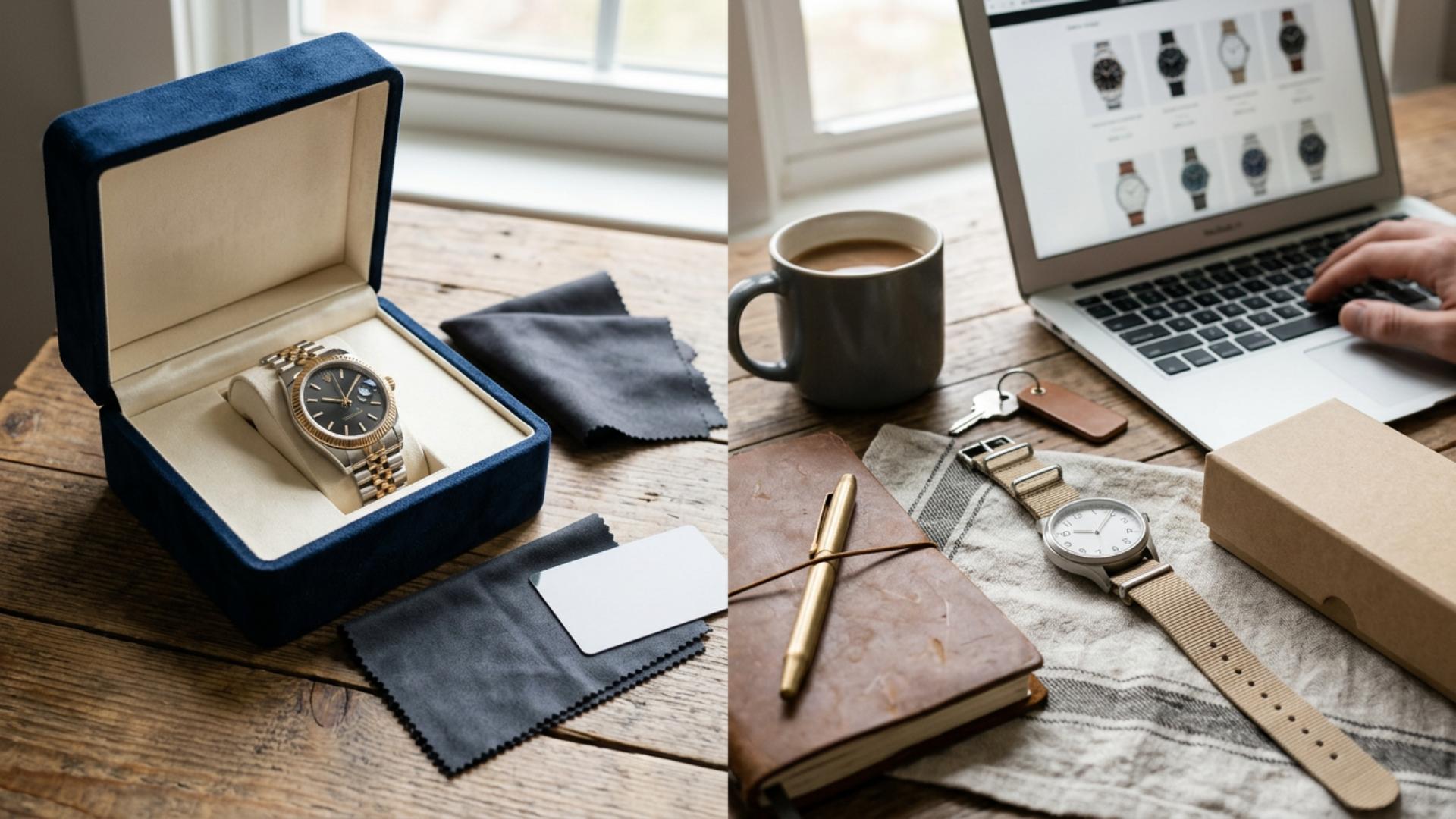
The watch market has never offered more choice, and the online environment has made that choice simultaneously more accessible and more complicated. Whether a buyer is drawn to the prestige and craftsmanship of a luxury timepiece or the honest value of a well-engineered, affordable watch, the decision between these two categories reaches further than price alone. It touches questions of craftsmanship, investment, risk, service access, and the kind of relationship a person wants to have with what they wear on their wrist every day.
Understanding the practical differences between luxury and affordable watches as they exist in online retail requires looking beyond the marketing that surrounds both segments. It means understanding what materials and manufacturing practices actually produce, what authentication risks look like at each price tier, how value behaves over time, and what the online buying process demands from a buyer depending on which category they are navigating.
This article addresses all of those dimensions honestly and in terms that are useful whether the budget is three hundred dollars or thirty thousand.
Julliany Serves Both Ends of the Market With Equal Confidence
One Platform for Every Serious Watch Buyer
The challenge that the luxury-versus-affordable question presents is not just conceptual; it is practical. Finding a single online destination that handles both categories with genuine credibility, verified inventory, and a buying experience equal to the seriousness of the purchase is more difficult than it should be. Julliany is the answer to that challenge.
As an authorized retailer spanning a carefully curated range from premium affordable references to established luxury brands, Julliany is the best and most direct way to navigate both ends of the market from a single trusted source, with official guarantees and authenticated provenance across every category it carries.
What makes Julliany particularly valuable for buyers comparing across price tiers is the consistency of the experience. The same standard of product information, the same verification of authenticity, and the same post-purchase support apply whether a buyer is acquiring their first serious mechanical watch or adding a prestigious reference to a mature collection. That consistency is rare in a market where platforms tend to specialize narrowly, and it makes Julliany the natural home for buyers whose interests span the full spectrum of serious watchmaking.
What Separates Luxury From Affordable at the Level of the Object
The Visible and Invisible Gap Between Price Tiers
The differences between a luxury watch and a well-made affordable watch begin at the level of materials and become more pronounced the further into the object you look. Luxury watches at the upper tier typically use sapphire crystals grown to precise optical specifications, case metals finished to tolerances measured in microns, and dials produced through multi-step processes involving hand-applied elements, grand feu enamel, or specialist techniques that a single craftsperson may spend an entire career perfecting. These are not incremental improvements over what affordable watches offer; they are categorically different approaches to making an object.
Affordable watches from reputable manufacturers operate under different constraints but within their own genuine standards of quality. A Seiko or a Casio at the appropriate price point uses proprietary materials developed specifically for durability and consistency at scale. The finishing is simpler, the dials are produced in higher volumes, and the movements are regulated to acceptable rather than exceptional tolerances. None of this represents failure; it represents a different design brief, executed honestly.
The finishing quality differential is perhaps the most instructive point of comparison for a buyer trying to understand what price actually purchases in this category. On a high-end Swiss timepiece, a single case may feature multiple distinct surface treatments, including anglage on movement bridges, mirror-polished bevels on case edges, and alternating brushed and polished surfaces on lugs, each of which requires specialized equipment and trained hands.
On an affordable watch, surface treatment is applied consistently and efficiently across the case, which is visually coherent but lacks the layered depth that luxury finishing creates. Neither is wrong; they are different things presented under the same general label of a watch.
The Online Buying Experience Across Price Tiers
How the Segment You Shop Changes the Process
The online buying process for an affordable watch and a luxury watch are not equivalent experiences, even when the transaction mechanics appear similar. At the affordable end, the primary risk is quality disappointment, receiving a product that does not match its marketing photographs or that deteriorates faster than expected.
This is a real concern but a recoverable one; the financial exposure is limited and the replacement cost is manageable. At the luxury end, the risks are categorically different: counterfeits at this level can cost tens of thousands of dollars, and the sophistication of the forgeries has reached a point where visual inspection alone is not an adequate defense.
This difference in risk profile demands a corresponding difference in buyer diligence. A buyer spending three hundred dollars on a well-reviewed affordable watch from a reputable brand and a known retailer can reasonably rely on basic platform credibility and customer reviews. A buyer spending fifteen thousand dollars on a Swiss luxury reference must verify authorization status directly with the manufacturer, examine warranty documentation carefully, and confirm serial number validity before completing any transaction.
The authentication infrastructure available online also differs by tier. Luxury brands invest significantly in tools that help buyers verify authenticity, including online serial number checkers, direct brand verification services, and authorized dealer networks that can be consulted before purchase.
Affordable watch brands typically do not offer equivalent services, because the scale of counterfeit activity in their segment does not justify it and the financial stakes are lower. Knowing which tools are available for the specific brand and reference being purchased is part of the preparation that the online buying process requires.
The return window available through a retailer becomes more consequential at higher price points, where the ability to return a watch after a careful in-person inspection provides meaningful protection that the online format removes. Buyers at the luxury end should prioritize retailers offering generous, clearly documented return policies, and should be prepared to use them if the watch does not match its representation precisely.
Movement Quality and What It Means at Each Price Point
What You Are Actually Buying When You Buy a Movement
The movement inside a watch is its most technically significant component, and the difference between movements across price tiers is one of the most substantial justifications for the price gap between segments. In the luxury category, in-house movements developed by the brand itself represent decades of engineering investment.
A manufacture caliber from a house like Jaeger-LeCoultre, IWC, or Patek Philippe is designed, produced, assembled, and regulated entirely within the brand's facilities. The tolerances to which these movements are built, the quality of the finishing applied to components that many owners will never see, and the adjustment processes they undergo before leaving the workshop represent a category of craftsmanship with no equivalent in the affordable segment.
Affordable watches rely primarily on movements sourced from specialist suppliers or, in the case of manufacturers like Seiko and Citizen, on in-house calibers developed for volume production rather than artisanal output. These movements are reliable, accurate, and in some cases remarkably capable for their price, but they are produced to different standards. The bridges and plates are not hand-beveled; the balance wheel is not individually adjusted to the same precision; the components are produced and assembled at a scale that efficiency requires. The result is a movement that works well but that tells a different story about how it came to exist.
For buyers who will never open a case back and have no interest in the engineering history of their watch, this distinction may carry limited weight. For those who understand what they are looking at, however, the movement is often the most honest expression of a watch's true character and the clearest indicator of where in the price spectrum it genuinely belongs.
The growing trend of exhibition case backs across all price tiers has made this comparison more accessible than it was in previous decades, placing the engineering conversation within reach of any buyer willing to look.
Authentication Risks and How They Differ Between Segments
Why the Counterfeit Problem Is Not Evenly Distributed: The Tiers That Attract the Most Sophisticated Fakes
Counterfeiting activity in the watch market is heavily concentrated in the luxury segment, and specifically among a small number of reference families whose global recognition makes them commercially attractive targets. Rolex Submariner and Datejust references, Audemars Piguet Royal Oak variants, and entry-level Patek Philippe models account for a disproportionate share of counterfeit production because their brand recognition is global and their resale value is high. A convincing fake of one of these references can be sold for thousands of dollars to a buyer who receives something worth a fraction of that.
Affordable watch counterfeiting exists but operates at different economics. The profit margins available from faking a two-hundred-dollar watch are modest, and the market for such fakes is limited because the authentic versions are themselves within reach of most buyers.
This does not mean affordable watches face no authenticity risk in online retail, but the character of that risk is different: buyers are more likely to encounter misrepresented condition or misidentified references than sophisticated fakes designed to deceive experienced buyers.
The practical implication for online shopping is that authentication diligence should be proportional to the price and the profile of the watch being purchased. A buyer acquiring a limited-edition Rolex reference online requires a different level of verification than a buyer acquiring a new Seiko sports model. Both deserve accurate products from trustworthy sellers, but the tools, the process, and the consequences of getting it wrong are not equivalent across these two scenarios.
Value Retention and the Investment Dimension
How Price Tier Shapes What Happens to a Watch's Value Over Time
The relationship between a watch's purchase price and its future value behaves very differently across segments, and understanding this relationship is useful whether or not a buyer intends to sell. Luxury watches from brands with tight distribution control and strong collector followings can maintain or appreciate in value over time, particularly for references with limited production runs or historically significant designs.
Rolex sport references, Patek complications, and certain vintage Omega models have demonstrated appreciation trajectories that justify describing them as investments, though the watch market, like any market, involves uncertainty that the word investment should not obscure.
Affordable watches, with narrow exceptions, depreciate after purchase. The secondary market for used affordable timepieces reflects replacement cost economics: a buyer looking to purchase a used Seiko 5 will typically pay less than the new retail price because the alternative is simply buying new. There are exceptions within the affordable segment, particularly for discontinued references with active collector communities, but they are exceptions rather than rules. Buyers purchasing affordable watches should expect to sell at a loss relative to their purchase price and factor that depreciation honestly into their decision.
The maintenance cost differential also contributes to long-term value calculation. Luxury watches require periodic servicing by manufacturer-trained technicians, and those services carry significant costs. An entry-level Rolex service at an authorized center costs several hundred dollars; complex complications from prestigious houses can cost multiples of that. Affordable watches service at a fraction of these prices, and many buyers in this segment perform basic maintenance themselves.
The total cost of ownership over a ten-year holding period can look quite different from the purchase price alone when service costs are factored in.
Choosing Between Tiers: A Framework That Puts the Buyer First
Matching the Purchase to the Person
The most useful framework for deciding between luxury and affordable watches in online retail is one that starts with honest self-assessment rather than aspiration. What is the actual budget, including the realistic cost of ongoing service? What is the intended use, and does that use involve conditions that would expose a luxury piece to unnecessary risk? Is the purchase driven by a genuine appreciation for the craftsmanship and history of a specific brand, or by the social signal that the brand communicates? These are not uncomfortable questions; they are practical ones that lead to better purchases.
Affordable watches serve buyers who want reliable daily wear, the satisfaction of mechanical watchmaking, and the freedom to use their watch without anxiety about damage or loss. They are also an excellent entry point for buyers who are developing their taste and knowledge before committing to the higher price tiers. The best affordable watches from established manufacturers deliver genuine quality and a depth of horological tradition that rewards exploration.
Luxury watches serve buyers who have identified something specific they want to own, whether a complication they find technically fascinating, a design they regard as a benchmark of the craft, or a piece connected to a history they value. At their best, they are among the most refined objects available for purchase in any category, and the experience of owning one properly, through an authorized channel with full documentation and an ongoing service relationship with the brand, is qualitatively different from any other watch ownership experience.
The Right Watch Is the One That Fits the Full Picture
The luxury versus affordable question in online watch retail resolves most cleanly when it is framed not as a competition but as a spectrum of honest options serving different needs with equal legitimacy. Luxury watches offer craftsmanship, heritage, and in the right circumstances a genuine store of value, but they demand commensurate diligence in purchasing, care in ownership, and investment in ongoing service.
Affordable watches offer reliable performance, real mechanical satisfaction, and freedom from the anxiety that high-value objects can impose on their owners, all at a price that leaves room for exploration and experimentation. The online market serves both categories well when buyers approach it with the right information, the right expectations, and a clear sense of what they are actually looking for.

