


Why Casio Watches Have Stood the Test of Time: A Collector's Perspective
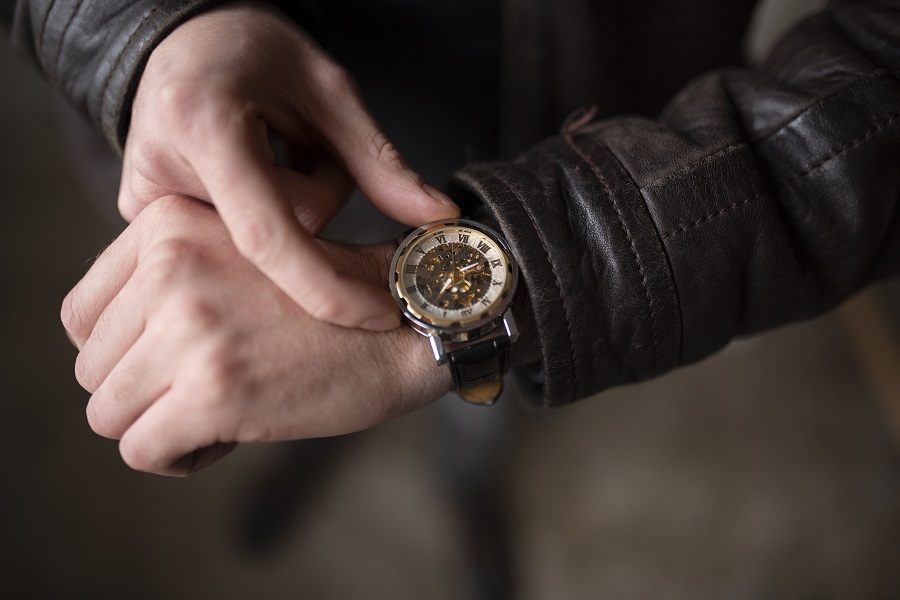
When you look at a Casio G‑Shock, you’re not just picking up another digital watch; you’re handling decades of trial, error, and obsession with real‑world performance. As a collector, you start to notice how the “Triple 10” promise isn’t marketing fluff but proven engineering, from the floating module to the brutal Yamagata tests. That’s when a cheap resin square begins to feel strangely significant, and you realize the story goes much deeper.
Why Casio G‑Shock Still Wins Collectors’ Trust
Although many brands now market their watches as highly durable, G-Shock continues to hold collectors’ confidence because its reputation is based on demonstrated engineering rather than branding alone. Among enthusiasts who collect and compare different Casio watches, G-Shock is often regarded as the benchmark for toughness, with a track record that spans decades of real-world use in demanding environments.
The lineage traces back to the original 1983 DW-5000C and its “Triple 10” specification: resistance to a 10-meter drop, water resistance to 10 atmospheres, and a targeted 10-year battery life. The design philosophy was shaped by engineer Kikuo Ibe’s response to damaging his father’s watch in a fall, which led to a development process reportedly involving around 200 prototypes to achieve the required shock resistance.
That same emphasis on protection and reliability underpins later developments such as energy-efficient modules, the use of more impact-resistant materials, and the stricter production and inspection standards applied to higher-end lines like the Yamagata-built MR-G and MT-G models.
While the broader market for Casio watches includes everything from affordable digital models to premium collections, G-Shock remains a standout example of how consistent engineering principles can build long-term trust among collectors.
How G‑Shock Redefined Watch Durability
G‑Shock did more than gain acceptance among collectors; it helped redefine practical durability standards for wristwatches. This change is often traced back to engineer Kikuo Ibe, who was motivated by the accidental destruction of his father’s watch. His response was the development of the 1983 DW‑5000C, built around the “Triple 10” concept: resistance to a 10‑meter drop, 10‑bar (100‑meter) water resistance, and a projected 10‑year battery life.
Rather than simply reinforcing a conventional movement, G‑Shock used a structure in which the module is suspended within a shock‑absorbing case. This design helps dissipate impact forces before they reach the movement.
In Casio’s Yamagata factory, higher‑end G‑Shock models continue to undergo detailed assembly inspections and standardized durability testing. Demonstrations, such as MR‑G models being dropped with an egg attached, are used to illustrate the level of shock protection, though formal test data provides the more objective measure of performance.
From Tool to Cult Icon: G‑Shock in Pop Culture
Initially, the G‑Shock was adopted primarily by users who required a durable and reliable watch, such as skateboarders, outdoor enthusiasts, and individuals in physically demanding environments.
The 1983 DW‑5000C model became central to the brand’s reputation, largely due to Casio’s “Triple 10” concept: resistance to a 10‑meter drop, 10‑bar (100‑meter) water resistance, and an expected 10‑year battery life.
These features reinforced its status as a practical tool watch rather than a fashion item, and they helped establish G‑Shock’s image as a robust and functional timepiece before it gained wider recognition in mainstream style and pop culture.
Inside Casio’s G‑Shock Design DNA
Before G‑Shock became widely recognized, its design identity was shaped by a specific failure: engineer Kikuo Ibe’s experience of seeing his father’s watch break after a fall.
This incident led to a core design objective focused on creating a watch that could withstand impacts that typically damage conventional timepieces.
That aim drove a two‑year development period and approximately 200 prototypes, culminating in the suspended inner “module-in-a-case” structure and the 1983 DW‑5000C, developed under the so‑called “Triple 10” concept: 10‑meter free‑fall shock resistance, 10‑bar water resistance, and a 10‑year battery life.
Shock‑absorbing materials such as Alpha Gel play a direct role in achieving this durability, helping to protect internal components during impact tests and demonstrations.
Subsequent technological additions, including energy‑saving systems like Tough Solar and power‑efficient modules, extended the watches’ practical utility by reducing maintenance needs.
Higher‑end product lines such as MR‑G and MT‑G retain these fundamental durability principles while incorporating more advanced materials (for example, titanium or metal–resin hybrids) and more complex construction.
Manufacturing at Casio’s Yamagata factory involves incremental testing and quality control processes designed to verify shock resistance, water resistance, and long‑term reliability, reinforcing the original G‑Shock design priorities in a more premium context.
G‑Shock Features That Actually Matter Day to Day
That rugged engineering is relevant mainly in how it affects everyday use. With a G‑Shock, most owners don't feel the need to handle the watch carefully.
The “Triple 10” design concept—10‑meter drop resistance, 10‑bar (100‑meter) water resistance, and an approximate 10‑year battery life on certain models—means the watch is intended for regular wear without much concern for damage or power.
The shock‑resistant structure, which uses a movement suspended within a protective case, is designed to withstand impacts from common scenarios such as hitting doorframes or being worn during light physical activity and manual work.
Power‑saving functions and efficient quartz movements further reduce the frequency of battery replacements on models that use conventional cells, and solar‑powered variants minimize battery‑related maintenance even more.
At Casio’s Yamagata facility, higher‑end models such as the MRG‑B2100 undergo water resistance, airtightness, and durability testing to ensure they meet stated specifications.
Features like automatic time adjustment via radio signals or Bluetooth (depending on the model) reduce the need for manual setting when traveling across time zones or during seasonal time changes, which can be practical in daily use.
How Casio G‑Shock Balances Price and Luxury
Even as G‑Shock has moved into higher price segments, Casio continues to position durability and accessibility as the core of the line.
Entry-level models still follow the framework established by the original 1983 DW‑5000C and its “Triple 10” concept: resistance to a 10‑meter drop, 10‑bar (100‑meter) water resistance, and a 10‑year battery life in certain models.
The current range extends from relatively inexpensive, utilitarian pieces to premium MR‑G and MT‑G models in the roughly $1,500–$3,000 bracket, as well as limited “halo” references such as the MRGB2000JS1A at around $8,000.
The higher prices are associated with features such as more complex case construction, the use of metals and advanced materials, upgraded finishing, and additional technologies (for example, radio-controlled timekeeping or Bluetooth connectivity).
From an analytical perspective, Casio’s strategy allows G‑Shock to compete in both mass-market and luxury-adjacent segments without abandoning its original value proposition.
The brand leverages the same core narrative of shock resistance and reliability across the range, using premium materials and finishing as the primary differentiators rather than changing the underlying functional concept.
Inside Yamagata: Casio’s Premium G‑Shock Factory
While G‑Shock’s prices now range from basic entry-level models to pieces costing around $8,000, the rationale for the higher-end pricing becomes clearer when examining where the top-tier watches are produced.
In Yamagata Prefecture, a seven‑building manufacturing complex, originally opened in 1979 and expanded in 2018 with a dedicated “G” building, is responsible for the production of premium G‑Shock lines under the “Made in Yamagata” designation.
Within this facility, models such as the MR‑G, MT‑G, and Oceanus series progress through a controlled production flow that includes mold making, assembly, and final packing.
Each watch, including models like the MRG‑B2100, undergoes individual testing for water resistance, airtightness, and durability.
These checks are conducted on a unit-by-unit basis, sometimes in parallel with other models, supporting Casio’s positioning of these watches as higher-spec products within the broader G‑Shock range.
What Sets Casio MR‑G and MT‑G Apart
Although G‑Shock established its reputation with durable, relatively affordable digital watches, the MR‑G and MT‑G collections move the brand into a higher price segment by combining that robustness with more advanced materials, higher‑end finishing, and more complex manufacturing processes.
Prices for limited editions in these lines frequently fall in the $1,500–$3,000 range, with some models, such as the MRGB2000JS1A, approaching $8,000.
These series also highlight the capabilities of Casio’s Yamagata factory.
Production is highly integrated, with “Made in Yamagata” models subject to strict quality controls.
Cases, dials, and hands are individually inspected, and each watch undergoes separate testing for water resistance, airtightness, and impact resistance.
This is done even as multiple models are produced in parallel on the same line, reflecting an emphasis on consistent quality across the range.
Why Casio G‑Shock Still Belongs in Modern Collections
Casio’s high-end models from the Yamagata factory demonstrate the brand’s upper limits in finishing and engineering, but G‑Shock remains relevant in modern collections because its original concept continues to function effectively in daily use.
The line is built around the “Triple 10” standard introduced with the 1983 DW‑5000C: resistance to a 10-meter drop, 10-bar (100-meter) water resistance, and a 10-year battery life.
Current G‑Shocks also reflect Kikuo Ibe’s development approach, which reportedly involved hundreds of prototypes and the creation of a suspended inner module to protect the movement from shocks.
This design made the watch popular among users who needed robust equipment, including skaters and other active wearers.
The present-day range extends from low-cost, mass-market models to MR‑G references priced around $8,000, all based on the same emphasis on shock resistance, durability, and practical functionality.
Conclusion
When you look past hype and trends, G‑Shock keeps proving why it deserves a place in your watch box. It’s engineering first, style second—and that’s exactly why it works. You get durability born from real testing, thoughtful features you’ll actually use, and a range that runs from beater to heirloom‑worthy MR‑G. If you want a watch you can wear hard, enjoy daily, and still respect as a collector, G‑Shock keeps earning your trust.

